
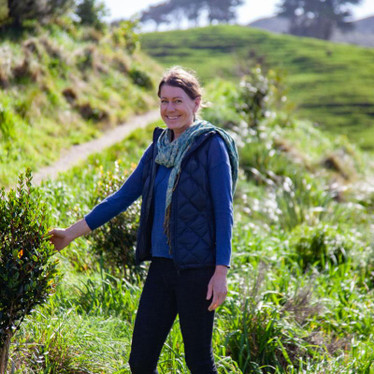

We chatted to Values Lead, Lucy Butler, who shares why we’ve made the conscious choice to invest in the regeneration of local native forests in Aotearoa. She shares what’s ahead for reducing and offsetting our carbon footprint, and what people like you – and businesses who care for our planet – can do to make a difference.
Hi Lucy, please tell us how HealthPost measures its carbon footprint?
To achieve Net Zero Carbon Business Operations with Ekos, we carefully measure, reduce, and offset both our direct and indirect carbon emissions — including our business operations and parcel deliveries.
We first began working with Ekos in 2020, and FY25 marks our sixth consecutive year of achieving Net Zero Carbon for HealthPost, and the fourth year for BioBalance – our in-house wellness brand. That kind of consistency really matters — it shows long-term commitment to progress and leadership in this area.
For FY25, we’ve achieved a 9.3% reduction in emissions compared with the previous year, and a 15.6% reduction from our base year (FY21) — even while including more emissions categories to our data, such as staff commuting, which we weren’t set up to measure FY21.
Some of this reduction reflects lower outward freight due to less favourable retail conditions. But we’ve also seen genuine operational improvements, with meaningful reductions across:
- Waste
- Business travel
- Purchased electricity
Our overall footprint is made up primarily of Scope 2 and Scope 3 emissions — meaning indirect emissions tied to transport, freight, imported electricity, packaging, and commuting, rather than sources we directly control. Like many online businesses, outbound freight remains our single largest emissions source, which is why reduction work here is especially important.
How does HealthPost reduce its carbon footprint?
We invest in constant improvement to our carbon data to get the most complete and accurate picture of our emissions, so that we can target our reduction efforts and effectively measure our progress.
Ongoing and recent reduction efforts include:
Increased renewable energy
Our solar panel upgrade at our Collingwood operations hub is already significantly reducing our purchased electricity emissions, with this site now producing more power annually than it consumes. This is a solid step toward long-term energy resilience and carbon reduction. The need for this is highlighted by the challenges to the renewable energy supply to the national grid in FY25, which necessitated a relatively greater reliance on fossil fuel and pushed emissions up. We expect to see this reduction in purchased electricity emissions flow through in FY26.
Waste reduction
We’ve continued to strengthen our on-site recycling and waste systems, building on substantial waste reductions achieved over recent years.
Staff commuting & travel
Staff commuting is one of the largest emission areas we can influence through culture and practical changes. We support flexible work-from-home options, encourage car-pooling, and operate under a strict travel policy, approving only essential journeys, helping reduce emissions year-on-year by 5.13%.
Changing our courier packaging
Our previous paper-based courier bags were made from post-consumer waste and easy to recycle but had a higher carbon footprint due to their weight and manufacturing processes. Our new courier bags are made from certified Ocean Bound Plastic waste, collected from coastal areas with no formal waste infrastructure. No virgin plastic is used in these bags and they’re recyclable through the NZ Soft Plastics recycling scheme. Independent lifecycle analysis shows POLLAST!C mailers have:
- 79% lower CO₂ than 100% recycled paper mailers
- 29% lower CO₂ emissions than traditional plastic mailers
We’ll see the meaningful reduction from this change reflected in our FY26 emissions report.
Working with NZ Post on freight emissions
Because outbound freight and associated fuel emissions make up the largest portion of our footprint, we work closely with NZ Post on ongoing reduction opportunities. As their nationwide network continues to electrify and become more carbon-efficient, we’re expecting to see continued reductions here over time — and we’ll keep playing our part in pushing for progress.
Shared progress with our suppliers
We’re grateful to Weleda, Lifestream, and Antipodes for continuing to share their direct Scope 1 and 2 emissions data with us. This kind of transparency strengthens the integrity of our reporting and helps lift carbon accountability across our wider industry.
How are HealthPost’s carbon emissions offset?
For FY25, we’ve once again offset our emissions through the Kahiwi Carbon Farm on Arapaoa Island in the Marlborough Sounds, using New Zealand Carbon Units (NZUs) generated by native forest regeneration and retired in the official New Zealand Carbon Register, keeping everything transparent and fully verifiable.
This is now our fourth year of investing in native forest regeneration with Kahiwi. Native forests may grow more slowly than exotic species, but they can continue storing carbon for centuries — creating a lasting environmental legacy we’re proud to support.
Beyond carbon: how is HealthPost restoring biodiversity?
Our offsetting is just one part of a much bigger picture. For 17 years, our team has been planting native trees across Mohua Golden Bay — now more than 16,000 trees and counting. Through the HealthPost Nature Trust, we lead local, large-scale restoration projects to help taonga native species thrive. Join the pledge to finish a 4km predator-proof fence that’ll help protect wildlife in Onetahua Farewell Spit.
This regeneration mahi sits over and above our formal carbon offsetting — because while carbon accounting matters, so does hands-on ecosystem regeneration.
What should conscious consumers look out for to help reduce their carbon footprint when shopping with us?
Shop Your Way allows you to filter by values most important to you – including our carbon neutral and climate positive brands. You can also discover who shares your ethical values through Mindful Brands – which celebrates brands leading the way in the areas of Social Responsibility, Transparency, Eco Packaging, and Environmental Sustainability.
Shopping with us helps create positive change as we actively work to influence greater carbon-accountability in our supply chain. Our strict range standards and transparent product information helps our customers across the board to shop in an environmentally conscious way.
We are also a certified B Corp. B Corp independently assesses our carbon and environmental commitments along with many other aspects of being a values-led business. Reputable independent certifications are an excellent way to see that businesses are walking their talk, and we’re proud to have plenty of other great B Corps in our range.
To hear directly from B Corp brand founders on how to create positive change when you shop, tune in to our Choose Well with HealthPost podcast episode “Greenwashing – what to look out for so you can choose mindfully”, featuring two B Corp brand founders – Bo Hendgen from Absolute Essential and Florence Van Dyke from Chia Sisters and New Zealand Trade and Enterprise.
Every time you choose HealthPost, you’re helping regenerate native forests across Aotearoa and support a lower-carbon future.
You can explore our full Zero Carbon journey on our website and read our FY25 Carbon Inventory Report here. Thank you for being part of this progress with us.

|